Outbound for Bootstrapped Startups: How to Build Pipeline With No Budget

Founder and CEO of Ozigi. Writes about go-to-market, content strategy, and the tooling small teams rely on.
TL;DR: When you cannot buy ads or wait years for inbound to compound, outbound is the channel that produces pipeline now, on close to no budget. The lean version is simple: define a narrow audience, source them from public places, write specific messages from your own accounts, follow up twice, and keep volume modest so you stay out of spam. The whole stack can cost almost nothing. The hard part is not money, it is doing it consistently every week. This guide covers why outbound fits bootstrappers, the cheap setup that runs it, and the motion to follow.
Bootstrapped founders do not get to buy their way to customers. No ad budget, no marketing team, no runway to wait for content to compound over 18 months. That sounds like a disadvantage, and in one way it is. But it also forces you toward the channel that works fastest on no money: outbound.
Outbound is not glamorous and it is not passive. It is also one of the only growth levers a bootstrapper fully controls. Here is how to run it well without spending much at all.
Why Is Outbound the Right Channel for a Bootstrapped Startup?
Outbound is right for bootstrappers because it produces pipeline now, costs almost nothing but time, and does not depend on an audience you do not yet have. Inbound and ads both require something you are short on: time or money.
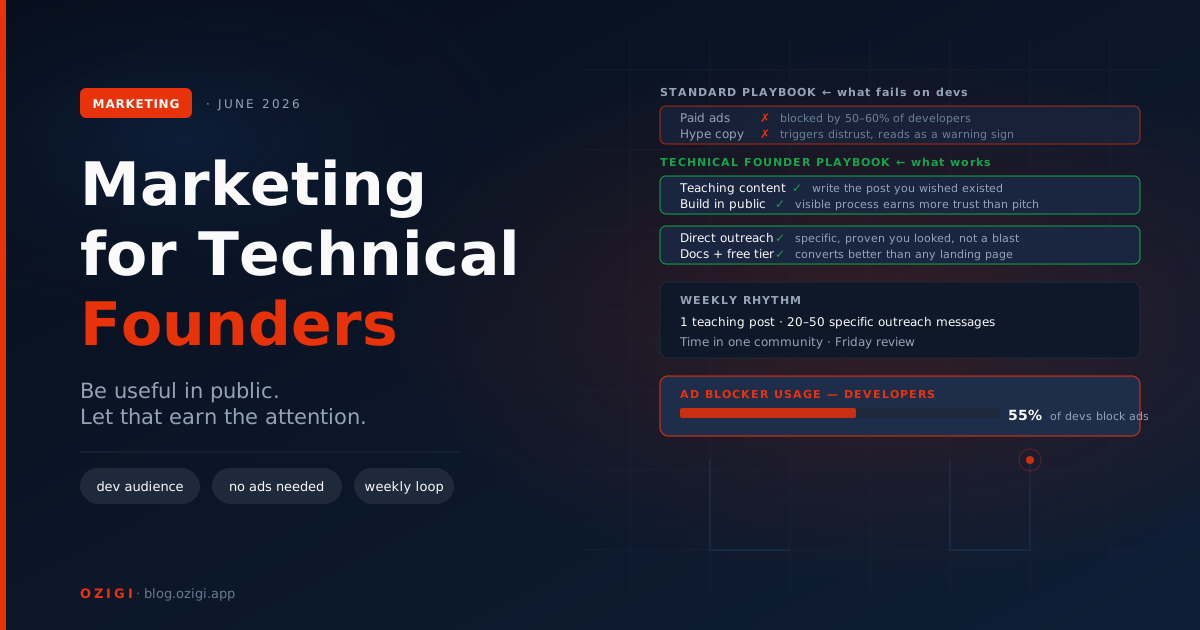
Inbound content is powerful, but it compounds slowly. The post you publish today might bring customers in six to twelve months. That is a great long game and a poor way to pay rent this quarter. Paid ads buy speed, but they cost money you do not have, and as covered in the playbook for marketing to technical founders, they often miss technical audiences anyway.
Outbound sits in between. You can start today, with no audience and no budget, and have conversations this week. You control exactly who you reach and what you say. For a bootstrapped startup that needs revenue before it needs a brand, that control is the whole point. Run content alongside it as the long game, but let outbound carry the near-term pipeline.
What Does Outbound Actually Cost a Bootstrapped Team?
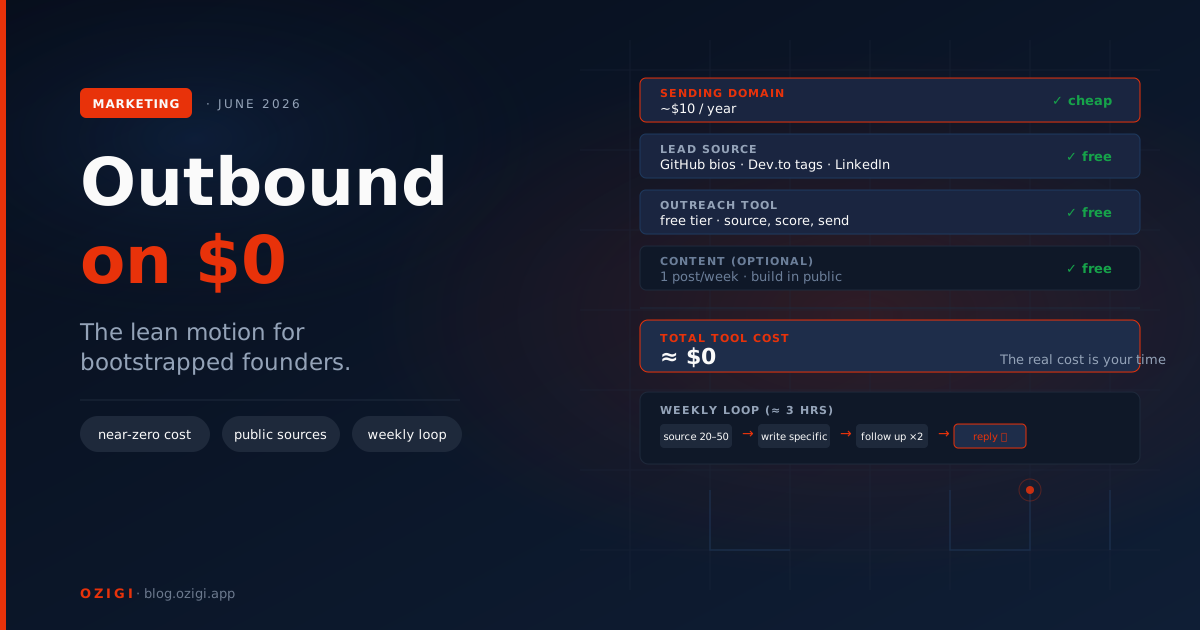
Run leanly, outbound can cost almost nothing beyond a sending domain and your time. The expensive part of outbound is the tooling, and most of that is optional when you are small.
The bare setup: a cheap sending domain separate from your main one, a mailbox or two, and the time to source and write. That is close to free. The cost creeps in when you assemble the usual stack, a data tool plus a sender plus a writing tool, which can run well past $150 a month at the tiers most teams pick, as broken down in the best free GTM tool comparison. A bootstrapper does not need that on day one. A free tier that sources, scores, and sends is enough to validate the motion before you pay for anything.
The real cost of outbound is not money. It is the discipline to do it every week when no one is making you. Budget for the time, not the tools.
How Do You Find People to Reach With No List?
You find them in public. Your buyers leave trails on GitHub, Dev.to, LinkedIn, directories, and communities, and you can build a list from those signals without buying data. Sourcing is a research task, not a purchase.
The approach is to define a narrow audience and then go where they are visible. For technical buyers, that means searching GitHub bios and Dev.to tags for people who match, then pulling the details that let you write to them like humans. The exact mechanics, including search qualifiers and recovering a contact email, are in how to find B2B leads on GitHub and Dev.to. The narrower your target, the easier this gets, which is why defining an ideal customer profile comes first.
Sourcing for free has one rule: only write to people who actually fit. A scored, tight list of 50 beats a scraped list of 5,000, both for replies and for staying out of spam.
How Do You Run Outbound Without a Sales Team?
You run it as a small weekly loop you do yourself: source a few people, write them specific messages from your own account, follow up twice, and let replies pull you into real conversations. No sales hires, no quota board.
A bootstrapped outbound week, in a few hours total:
- Source and score 20 to 50 people who match your ICP
- Write each a short, specific first message, referencing something real
- Send in small daily batches from your own warmed account
- Follow up once or twice, spaced a few days apart, then stop
- Drop everything and reply the moment someone answers
The volume stays modest on purpose. As a bootstrapper you are not trying to flood inboxes, you are trying to start a manageable number of real conversations you can personally handle. The channel choice between email and LinkedIn, and how to combine them, is covered in email or LinkedIn for dev tools.
How Do You Stay Out of Spam on a Tiny Budget?
You stay out of spam by setting up authentication, warming your domain, sending modest volume, and keeping your list clean. None of that costs money, only attention, which is exactly the bootstrapper's available resource.
The free fundamentals matter more than any paid deliverability tool. Set up SPF, DKIM, and DMARC on your sending domain, which costs nothing but a few DNS records. Warm the domain slowly before real sending, per how to warm up a sending domain in 2026. Keep each inbox under roughly 30 to 50 sends a day, covered in how many cold emails you can send per day. And verify addresses so bounces stay low. A bootstrapper who gets these basics right out-delivers a funded competitor who buys expensive tools but skips the fundamentals.
How Do You Keep Outbound Compliant and Honest?
You keep it compliant by sending from real accounts with your identity and address attached, a working opt-out, and contacts sourced from professional context, not purchased lists. For B2B outreach in most markets this is both legal and cheap to get right.
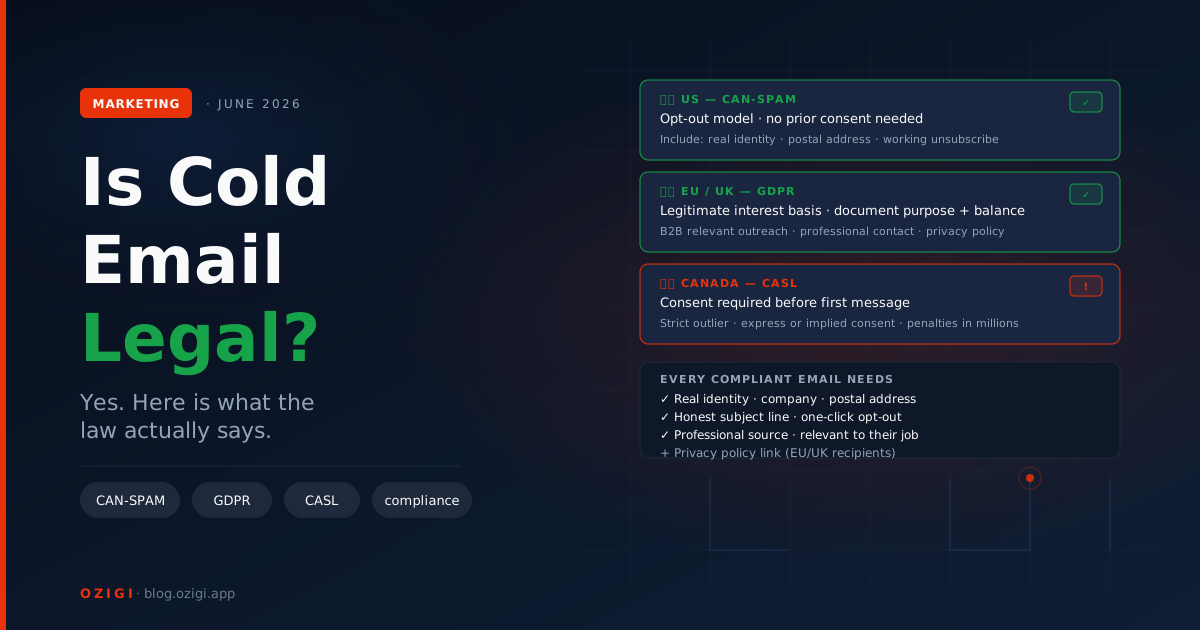
This matters more for a small team than it might seem, because a compliance or deliverability mistake is expensive when you have no margin for error. Include a physical address and a one-click unsubscribe, only email people for whom you have a genuine business reason, and record where you sourced each contact. The full picture, including CAN-SPAM and GDPR, is in is cold email legal: a small-team guide. Doing this is not a tax on growth. It is what keeps your one sending domain alive.
Frequently Asked Questions
Is outbound a good channel for bootstrapped startups? Yes, often the best early channel. It produces pipeline now rather than in a year, costs almost nothing but time, and works without an existing audience. Inbound content compounds too slowly to pay near-term bills, and ads cost money bootstrappers do not have and often miss technical audiences anyway.
How much does outbound cost for a bootstrapped team? Run leanly, very little: a cheap sending domain, a mailbox or two, and your time. The expense comes from assembling a data tool plus a sender plus a writing tool, which can exceed $150 a month. A free tier that sources, scores, and sends is enough to validate the motion before paying for anything.
How do I find leads with no budget and no list? Source them from public places where your buyers are visible: GitHub bios, Dev.to tags, LinkedIn, directories, and communities. Define a narrow ideal customer profile first, then pull people who match along with the details needed to write to them. A scored list of 50 beats a scraped list of thousands.
Can I do outbound without a sales team? Yes. Run it as a small weekly loop yourself: source and score a few dozen people, write each a specific message, send in small batches from your own account, follow up twice, and reply personally when someone answers. Founder-led outbound usually outperforms an early sales hire anyway.
How do I avoid spam on a small budget? The fundamentals are free: set up SPF, DKIM, and DMARC, warm your domain slowly, keep each inbox under roughly 30 to 50 sends a day, and verify addresses to keep bounces low. These basics matter more than any paid deliverability tool and let a bootstrapper out-deliver a funded competitor who skips them.
Sources and Further Reading
External references used in this article:
Related Ozigi reading:
- What is the best free GTM tool in 2026
- How to find B2B leads on GitHub and Dev.to
- How to warm up a sending domain in 2026
- Is cold email legal? A small-team guide to CAN-SPAM and GDPR
Ozigi runs the full outbound loop on a free tier: it sources and scores leads, writes the outreach in your voice, and paces sending so you stay out of spam. Built for founders without a budget to burn. Try the free cold email generator or the free LinkedIn outreach generator — no signup required.
About the author
Founder and CEO of Ozigi. Writes about go-to-market, content strategy, and the tooling small teams rely on.