Email or LinkedIn: Which Outreach Channel Works for Dev Tools?

Founder and CEO of Ozigi. Writes about go-to-market, content strategy, and the tooling small teams rely on.
TL;DR: For developer products, lead with email and use LinkedIn as the warm, visible second touch. Email scales, reaches engineers at the address they actually commit code with, and has no hard weekly ceiling beyond deliverability limits. LinkedIn is more personal and harder to ignore, but it is capped at roughly 100 connection requests a week and many developers barely check it. The strongest motion is not either-or. It is a sequence that opens on one channel and follows up on the other, in one consistent voice. This guide compares the two and shows how to combine them.
The channel question is the wrong question if you ask it as either-or. The right framing is which channel opens the conversation and which one reinforces it.
For developer audiences specifically, the answer leans toward email, for reasons that have nothing to do with email being trendy and everything to do with where engineers actually are. But LinkedIn earns a real role in the sequence. Here is how to think about both.
Do Developers Actually Respond to Cold Email?
Yes, when the email is specific and clearly written by a human. Developers live in their inboxes for pull request notifications, CI alerts, and release updates, so a well-targeted message reaches them where they already pay attention.
The catch is the bar. Developers have a finely tuned filter for marketing, and a generic template trips it instantly. A cold email that opens with a flattering line about their "innovative team" gets deleted before the second sentence. One that references a specific repo they maintain or a problem they wrote about gets read.
This is why email works for this audience only when paired with real targeting and a real voice. The reach is there. The reply rate depends entirely on whether the message earns it. We cover the writing side in the note on cold email that does not sound like AI.
Does LinkedIn Outreach Work for Developer Audiences?
LinkedIn works, but less reliably for developers than for sales or executive buyers. Plenty of engineers keep a LinkedIn profile they never check, so a connection request can sit unseen for weeks. When it does land, though, it carries more weight than an email, because it is tied to a real identity and shows up in a quieter feed.
There is also a hard ceiling. LinkedIn caps connection requests at roughly 100 per week for most accounts, stretching to 100 to 200 depending on account age and standing, based on widely reported 2026 limits. Send more and you hit a temporary restriction. That ceiling makes LinkedIn a precision instrument, not a volume channel. You cannot blast it, and you should not try.
The upside is signal. A developer who accepts your connection and reads your note has given you more attention than an email open ever could. LinkedIn is where you deepen a relationship, not where you start a thousand of them.
Email vs LinkedIn: How Do They Compare for Dev Tools?
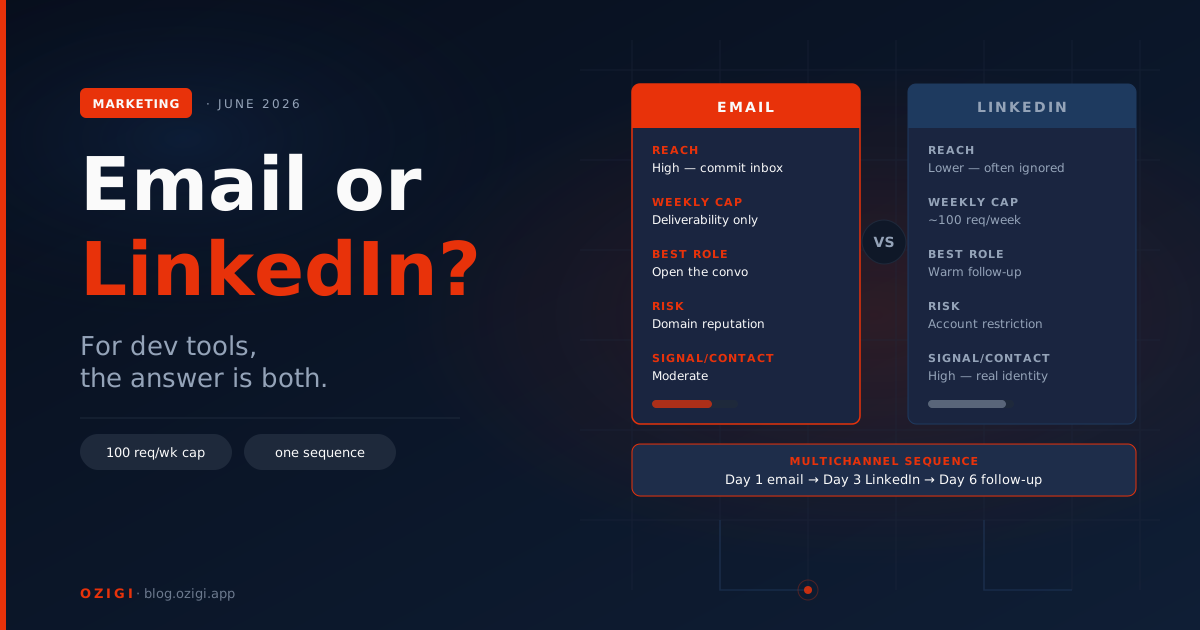
Email wins on reach and scale; LinkedIn wins on visibility and trust per contact. The two are complements, not substitutes. Here is the comparison that matters for a developer motion.
| Factor | Cold email | |
|---|---|---|
| Reach | High; most developers are reachable by email | Lower; many developers ignore LinkedIn |
| Weekly ceiling | Bounded by deliverability, not a hard cap | Roughly 100 requests/week, up to 200 by standing |
| Where the address comes from | Public commit history, sign-up data, your list | Profile only; no email exposed |
| Signal per contact | Moderate | High; tied to a real identity |
| Personalization source | Repos, posts, issues, bio | Profile, shared connections, activity |
| Best role in a sequence | Open the conversation | Warm follow-up or first touch for senior buyers |
| Risk if overdone | Spam folder, domain reputation damage | Account restriction |
The takeaway is not that one is better. It is that they fail and succeed in different ways, so using both spreads your risk and doubles your touchpoints without doubling the annoyance.
When Should You Lead With Email vs LinkedIn?
Lead with email when you have a working address and your ICP is technical and email-reachable, which is most developer products. Lead with LinkedIn when the buyer is more senior, when you have no email, or when a warm mutual connection gives you a natural opening.
A few practical rules:
- Email first for individual contributors and founding engineers you found on GitHub. You can recover their commit email, and they read their inbox.
- LinkedIn first for heads of engineering, VPs, and other senior buyers who live on LinkedIn more than in a code editor.
- LinkedIn as follow-up when an email goes unanswered but the person is active on LinkedIn. A short, relevant connection note after a quiet email often restarts the conversation.
- Skip a channel entirely when the data is not there. No email and an inactive LinkedIn profile means move on, do not force it.
How Do You Combine Both Into One Sequence?
You combine them by building a single sequence with steps on each channel, spaced out over days, in one consistent voice. The point is that the email and the LinkedIn note feel like the same person, because to the recipient, they are.
A simple multichannel sequence for a developer lead:
- Day 1, email. A short, specific intro that references something real about their work.
- Day 3, LinkedIn. A connection request with a one-line note that picks up the same thread, not a copy-paste of the email.
- Day 6, email. A brief follow-up that adds a new angle, not just "bumping this."
- Stop on reply. The moment they answer on either channel, the sequence pauses and a real conversation takes over.
This is how the Ozigi GTM engine runs outreach: email and LinkedIn steps in one campaign, with delays you control, daily limits that protect both your sending reputation and your LinkedIn account, and reply detection that stops the sequence automatically. Because the same persona voice writes every step, the email and the LinkedIn note never read like two different people. That consistency is the whole reason multichannel beats single-channel: more touches, one coherent identity.
Want to see a sample of each before setting up a full sequence? Try the free cold email generator and the free LinkedIn outreach generator — both run without signing up.
What Are the Limits and Risks of Each Channel?
Email risks your domain reputation if you send too much too fast; LinkedIn risks your account if you exceed its weekly cap. Both reward steady, modest volume and punish bursts.
On email, the danger is the spam folder and long-term domain damage. Send in small daily batches, warm new domains before using them, and keep your list clean. The full deliverability picture, including how many emails you can safely send per day, is its own subject we will cover in an upcoming piece.
On LinkedIn, the danger is a restriction. Stay near the weekly ceiling rather than pushing past it, keep your acceptance rate healthy by only requesting people who fit, and spread requests across the week instead of firing them all at once. Treat both channels like reputations you are building, because that is exactly what they are.
Frequently Asked Questions
Is email or LinkedIn better for reaching developers? Email is usually the better opener for developer audiences, because most engineers are reachable by email and check their inbox for code and CI notifications. LinkedIn is a strong second touch and a better first touch for senior buyers, but it is capped at roughly 100 requests a week and many developers rarely check it.
How many LinkedIn connection requests can I send per week? Most accounts are capped at around 100 connection requests per week, stretching to between 100 and 200 depending on account age, standing, and acceptance rate. Exceeding the limit triggers a temporary restriction. This makes LinkedIn a precision channel for targeted outreach rather than a high-volume one.
Do developers respond to cold email? Yes, when the email is specific and clearly written by a human rather than a template. Developers reach their inbox constantly but filter marketing language aggressively. A message that references a real repo, post, or problem gets read; a generic pitch about an "innovative team" gets deleted immediately.
Should I use email and LinkedIn together? Yes. The strongest motion combines both into one sequence: open on one channel, follow up on the other, spaced over several days, in a single consistent voice. Using both spreads your risk across channels and adds touchpoints without becoming annoying, as long as the messages read like the same person wrote them.
What are the risks of cold outreach on each channel? Email can damage your domain reputation and land in spam if you send too much too fast, so send in small steady batches. LinkedIn can restrict your account if you exceed the weekly request cap, so stay under it and keep your acceptance rate healthy. Both channels reward modest, consistent volume.
Can one tool run both email and LinkedIn outreach? Yes. A multichannel GTM tool can run email and LinkedIn steps in a single sequence with controlled delays, per-channel daily limits, and automatic reply detection. Ozigi does this with one persona voice across both channels, so the email and the LinkedIn note feel like they came from the same person.
Run email and LinkedIn outreach in one sequence, in one voice, with Ozigi. It sources and scores your leads, then writes both channels for you. Free to start, no credit card. Try the free cold email generator or the free LinkedIn outreach generator first — no signup required.
About the author
Founder and CEO of Ozigi. Writes about go-to-market, content strategy, and the tooling small teams rely on.