How Do You Do Sales as a Developer Without Being Salesy?

Samuel Thomas is a Technical Writer, DevRel, and Technology Advocate passionate about simplifying complex technologies for developers and businesses. He specializes in developer education and developer marketing.
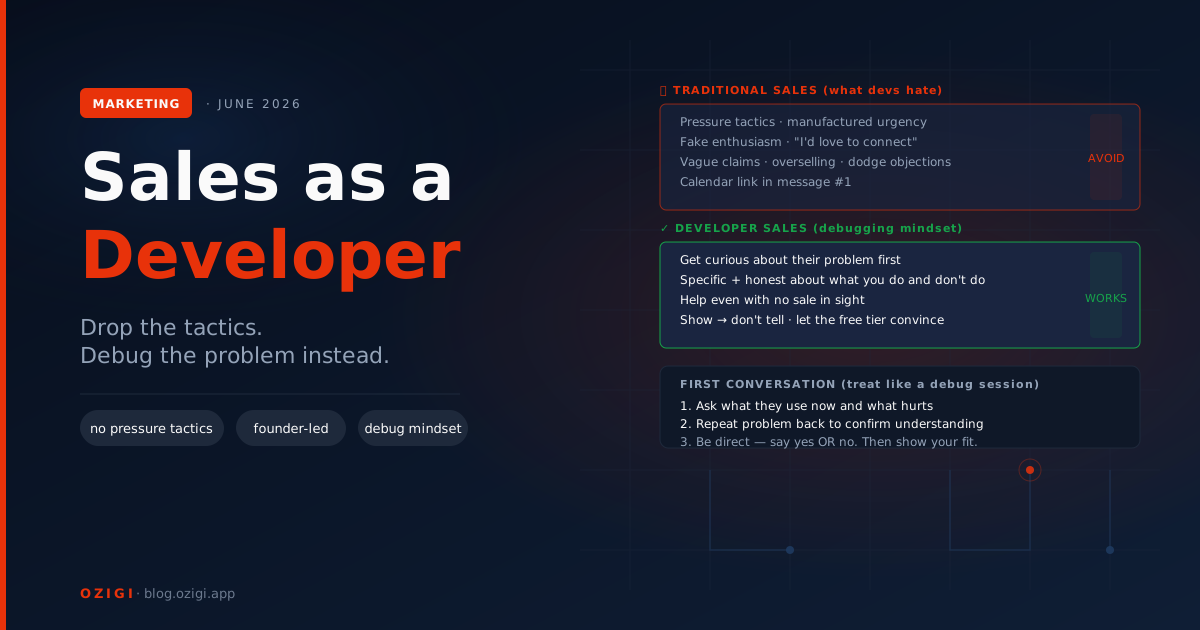
TL;DR: Developers hate "sales" because they picture pressure, fake enthusiasm, and tactics. But the version that works for a technical founder is the opposite of that. It is closer to debugging than to closing: get curious about the person's problem, be specific and honest, and help even when it does not lead to a sale. Founder-led sales beats hiring a slick rep early on, because you understand the problem better than anyone you could hire. The trick is not to learn "sales techniques." It is to drop them, talk like yourself, and let genuine usefulness do the work.
If the word "sales" makes you want to close the tab, you are the person this is for.
Most developers carry a mental image of sales that is all pressure and performance: the pushy call, the fake urgency, the person who will say anything to hit quota. No wonder you would rather ship features. But that image is a caricature of bad sales, and copying it is exactly what makes founders feel slimy. There is another way to do this, and it suits how engineers already think.
Why Do Developers Hate Sales?
Developers hate sales because the version they have seen is dishonest, and dishonesty is the one thing the engineering mindset cannot tolerate. Pushy tactics, vague claims, and manufactured urgency all fail the basic test of being true.
There is a deeper reason too. Engineers are trained to value precision and to distrust anyone who oversells. So when a founder tries to "do sales" by imitating a stereotypical rep, every instinct screams that this is wrong, because it is. You are performing a role that conflicts with your own values, and both you and the buyer feel it.
The reframe that fixes this is simple: you are not here to convince anyone of anything false. You are here to find the people who genuinely have the problem you solve and help them. That is a job a developer can do without flinching.
What Does Non-Salesy Selling Actually Look Like?
Non-salesy selling looks like curiosity, not persuasion. You ask about the person's problem more than you talk about your product, and you are willing to conclude that you are not a fit. It feels like a technical conversation, because that is what it is.
The shape of it:
- Lead with their problem, not your features. Ask what they are dealing with before you say a word about what you built.
- Be specific and honest. Say what your product does well and where it falls short. Engineers trust the founder who names a limitation.
- Help even with no sale in sight. Point them to a better fit if you are not it. The goodwill compounds, and the technical world is small.
- Let them try it. A real free tier and good docs do more convincing than any pitch you could deliver.
This works because it matches how technical people buy. They are not waiting to be persuaded. They are gathering information to decide for themselves, and the most useful, honest person in that process tends to win.
Why Is Founder-Led Sales Better Than Hiring a Rep Early?
Founder-led sales is better early because you understand the problem more deeply than any rep you could afford, and that depth is what technical buyers respond to. A junior salesperson reading from a script cannot answer the real questions. You can.
Early customers are not buying a polished pitch. They are buying confidence that the person behind the product understands their world. When the founder shows up, asks sharp questions, and answers technical objections without dodging, that is worth more than any sales training. You also learn from every conversation in a way a hired rep cannot pass back to you cleanly: the objections, the missing features, the words customers actually use. That learning shapes the product and the next hundred messages.
There is a point where you outgrow doing it all yourself, but it comes later than most founders think. The first stretch of sales is a founder's job, and being a developer is an advantage in it, not a handicap.
How Do You Write Outreach That Does Not Feel Slimy?
You write it the way you would message a peer whose work you respect: short, specific, and easy to ignore. The slimy feeling comes from pretending, so the cure is to stop pretending and just be a useful person who did their homework.
The difference is concrete. A slimy message opens with fake praise and pushes for a call. A human one references something real about the person's work, names why you are reaching out, and makes one small, honest ask. Generic, templated outreach is what gives cold email its bad name, and it underperforms badly: personalized outreach roughly doubles reply rates over generic blasts, per B2B cold email benchmarks for 2026. The full method is in how to write a cold email that does not sound like AI, and the diagnosis for when outreach gets ignored is in why am I getting no replies to my cold emails.
The mindset that makes this easy: you are not interrupting a stranger to extract something. You are starting a conversation with someone who might have a problem you can solve, and you are fine if they do not.
How Do You Handle the Actual Sales Conversation?
You handle it like a debugging session: ask questions, listen, isolate the real problem, and only then talk about whether your product fits. The goal of the first conversation is understanding, not closing.
A few moves that keep it honest and effective. Ask what they are using now and what is painful about it. Repeat their problem back to confirm you understood it. Be direct about whether you can help, including saying no when you cannot. And if you can help, show rather than tell, by walking through how your product handles their specific case. The pressure tactics you were dreading are not just unnecessary here, they would actively break the trust this approach is built on.
This is also where being a developer pays off again. You can go as deep technically as the conversation needs, which is exactly the depth a technical buyer is testing for.
How Do You Scale This Without Losing the Personal Touch?
You scale it by keeping the personalization that makes it work and automating only the parts that do not require you: sourcing the right people, drafting a specific first message, and tracking who replied. The judgment stays human; the busywork does not.
This is the balance a small team has to strike. You cannot hand-write every message at volume, but fully automated outreach produces the generic slime you are trying to avoid. The middle path is a tool that sources people matching your ideal customer profile, drafts each message from their real profile in your voice, and stops the moment someone replies so you can step in as yourself. That is how the Ozigi GTM engine is built: it does the finding and the first draft, you do the conversation. The personal touch survives because the part that needs you stays with you.
Frequently Asked Questions
How do you do sales as a developer without being pushy? Treat it like a technical conversation, not a pitch. Get curious about the person's problem, be specific and honest about what your product does and does not do, and be willing to say you are not a fit. Help even when there is no sale. This matches how engineers buy and removes the slimy feeling entirely.
Is founder-led sales better than hiring a salesperson? Early on, yes. You understand the problem more deeply than any rep you could afford, and technical buyers respond to that depth. You also learn directly from every conversation in a way a hired rep cannot relay. There is a point to hire, but it comes later than most founders assume.
How do I write cold outreach that does not feel slimy? Write it like a message to a peer whose work you respect: short, specific, referencing something real about them, with one small honest ask. The slimy feeling comes from pretending or pushing. Generic templates cause it; doing your homework and being a useful person cures it.
What should I do in a first sales conversation? Treat it like debugging. Ask what they use now and what hurts about it, repeat the problem back to confirm you understood, and be direct about whether you can help, including saying no. Only then show how your product fits their specific case. Aim for understanding, not closing.
Do I need to learn sales techniques as a founder? Mostly you need to unlearn them. The pressure tactics that come to mind when people say "sales" actively break trust with technical buyers. Curiosity, honesty, and genuine usefulness work better and feel natural. The one skill worth building is asking good questions and listening to the answers.
Sources and Further Reading
External references used in this article:
Related Ozigi reading:
- How to write a cold email that does not sound like AI
- Why am I getting no replies to my cold emails
- How to define an ICP when your buyers are developers
- What does go-to-market look like for a small technical team
Ozigi does the finding and the first draft so you can do the conversation. It sources people who fit, writes outreach in your voice, and steps aside the moment someone replies. Free to start.
About the author
Samuel Thomas is a Technical Writer, DevRel, and Technology Advocate passionate about simplifying complex technologies for developers and businesses. He specializes in developer education and developer marketing.