Why Am I Getting No Replies to My Cold Emails?

Founder and CEO of Ozigi. Writes about go-to-market, content strategy, and the tooling small teams rely on.
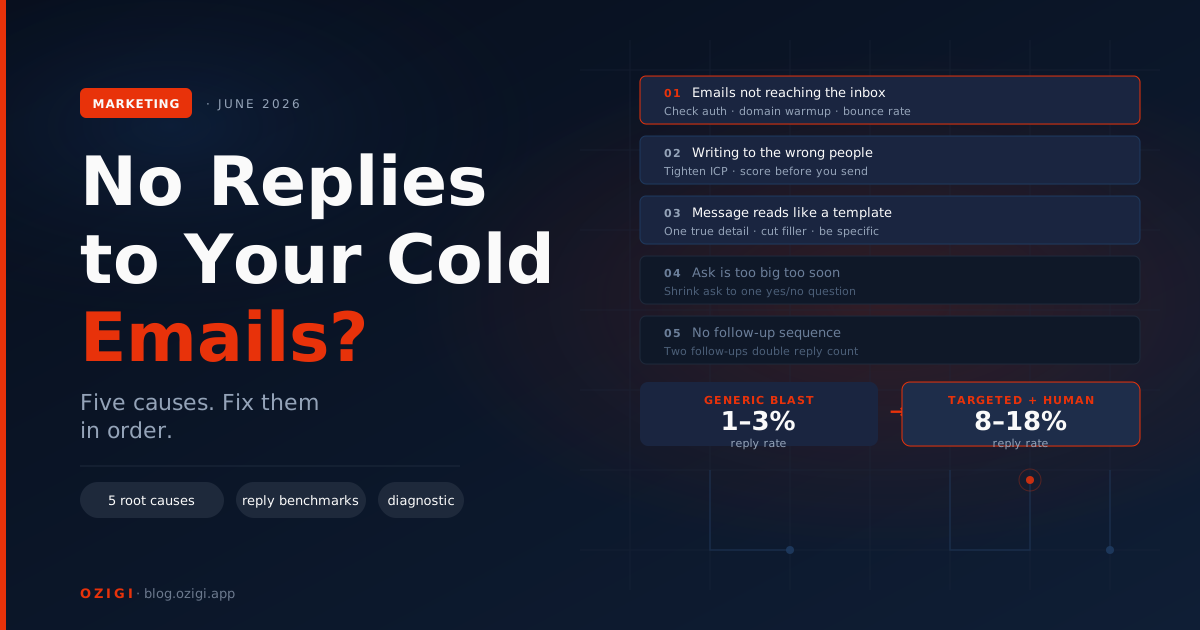
TL;DR: No replies almost always trace to one of five causes, and volume is rarely the fix. Either your emails are not reaching the inbox, you are writing to the wrong people, your message reads like a template, your ask is too big, or you are not following up. Work through them in that order, because there is no point improving your copy if the email is landing in spam, and no point sending more if you are sending to the wrong list. A clean, targeted, human campaign with two follow-ups should see replies in the 8 to 18% range. If you are near zero, one of these five is broken.
You sent 200 cold emails and heard nothing back. Before you blame the product, the market, or yourself, know that silence is the default, not a verdict. Around half of all cold emails are ignored outright, and a flat zero usually means something specific is broken, not that cold email does not work.
The good news is that "no replies" has a short list of causes. Here they are in the order you should check them, because fixing them out of order wastes your time.
Are Your Emails Even Being Delivered?
Start here, because if your emails are in the spam folder, nothing else matters. You can write the best cold email in the world and get zero replies if no human ever sees it.
The signs you have a delivery problem rather than a copy problem: a sudden drop to near-zero replies, open rates that crater, or test emails to your own other accounts landing in spam or the promotions tab. If that is happening, the issue is your sending setup, not your words.
The usual culprits are missing authentication, a cold domain sending too much too soon, or a list full of invalid addresses driving bounces. Fixing those is its own subject, covered in the guides on how to warm up a sending domain and how many cold emails you can send per day without landing in spam. Rule delivery out first. Then move on.
Are You Emailing the Right People?
If delivery is fine and you still hear nothing, the next suspect is your list. A perfect email to the wrong person gets the same result as no email at all: silence.
Wrong can mean several things. The person has no need for what you sell. They cannot make or influence the decision. The company is the wrong size or stage. Or the list is so broad that no single message could possibly be relevant to all of it. Any of these turns a good email into noise.
The fix is a tighter target. A specific message to 50 well-chosen people beats a generic one to 500 strangers, every time. If your reply rate is near zero across a big list, the list is the most likely problem. Tightening your ideal customer profile and sourcing only people who match it is usually the single biggest lever you have.
Does Your Email Read Like a Human or a Template?
If you are reaching the right people and still getting nothing, read your email out loud. If it sounds like a template, that is your answer. Recipients delete generic outreach in seconds, and in 2026 spam filters increasingly do too.
The numbers are stark. Generic cold emails see around 9% response rates, while emails with real personalization run closer to 18%, roughly double, according to B2B cold email benchmarks for 2026. Yet only about 5% of senders personalize every message. The opener "I hope this email finds you well" followed by a generic value claim is the exact pattern people have been trained to ignore.
Real personalization is not a merge field. It is one true, specific detail: a repo they maintain, a post they wrote, a problem they raised. The full breakdown is in how to write a cold email that does not sound like AI, but the short version is: be specific, be brief, and cut the filler words that mark a machine.
Is Your Ask Too Big?
A common reason for silence is that the email asks for too much, too soon. "Do you have 30 minutes for a call this week" is a large ask from a stranger. The bigger the ask, the easier it is to ignore.
The fix is to shrink the ask to something a busy person can say yes to in one line. Ask whether a problem is worth a look. Ask if you can send a short example. Ask a single yes-or-no question. You are trying to start a conversation, not close a deal in message one. One small, specific ask gets far more replies than a calendar link in a first email.
Are You Following Up?
If you send one email and stop, you are leaving most of your replies on the table. A large share of positive responses come from the second and third message, not the first. People are busy, your first email arrived at a bad moment, and a polite follow-up catches them at a better one.
The pattern that works is a short sequence: an opener, then one or two follow-ups spaced a few days apart, each adding something new rather than just "bumping this." Then you stop. Endless follow-ups annoy people and hurt your reputation, but two well-timed ones often double your reply count. Reply detection should pause the sequence the moment someone answers, so a real conversation can take over.
How Do You Diagnose This Quickly?
Run through the five causes in order and stop at the first one that is broken. Most "no replies" problems are solved by the time you reach the third check.
- Delivery. Send a test to your other accounts. In spam or promotions? Fix sending before anything else.
- Targeting. Are these the right people, with the need, the authority, and the fit? If not, tighten the list.
- Voice. Read it aloud. Does it sound like a person or a template? Cut filler, add one specific detail. If you want a quick before/after, Ozigi's free cold email generator writes a sample from your product and target description in seconds, no signup required.
- Ask. Is the request small enough to answer in one line? Shrink it.
- Follow-up. Are you sending two or three, spaced out? Add them.
What Reply Rate Should You Actually Expect?
A healthy, targeted cold campaign with personalization and follow-ups should see replies in the 8 to 18% range. A generic blast to a broad list often sits at 1 to 3%. Zero is not a normal low score; it is a signal that one of the five causes above is fully broken.
Set your expectations against the right benchmark. If you are at 10% and want 15%, that is optimization. If you are at 0 to 1%, that is diagnosis, and the checklist above is where you start. The teams with the highest reply rates are not sending the most email. They have clean delivery, a tight list, a human voice, a small ask, and a couple of follow-ups, all at once.
Frequently Asked Questions
Why am I getting no replies to my cold emails? Almost always one of five causes: your emails are landing in spam, you are emailing the wrong people, your message reads like a template, your ask is too big, or you are not following up. Check them in that order. Sending more email rarely fixes the problem and often makes delivery worse.
What is a good cold email reply rate? A targeted campaign with personalization and follow-ups should see 8 to 18% replies. A generic blast to a broad list typically sees 1 to 3%. A rate near zero usually means a specific problem, most often a delivery issue or a badly matched list, rather than normal low performance.
Should I send more cold emails to get more replies? Usually no. If your reply rate is near zero, more volume just multiplies whatever is broken and can damage your sender reputation. Fix delivery, targeting, voice, the ask, and follow-ups first. A smaller, tighter, well-crafted campaign beats a larger generic one on replies almost every time.
Do follow-ups actually increase replies? Yes, significantly. A large share of positive responses come from the second and third message rather than the first. Send a short sequence of two or three messages spaced a few days apart, each adding something new, then stop. Pause the sequence automatically the moment someone replies.
How do I know if my cold emails are going to spam? Send test emails to your own accounts on Gmail, Outlook, and Yahoo and see where they land. A sudden drop to near-zero replies and falling open rates also signal a delivery problem. If tests land in spam or promotions, fix authentication, domain warmup, and list quality before touching your copy.
Sources and Further Reading
External references used in this article:
Related Ozigi reading:
- How to write a cold email that does not sound like AI
- How many cold emails can you send per day without landing in spam
- How to warm up a sending domain in 2026
- How to define an ICP when your buyers are developers
Ozigi sources the right people, writes outreach that sounds human, and paces your sending so it lands. If cold email has gone quiet, it fixes the causes above by default. Try the free cold email generator — no signup required.
About the author
Founder and CEO of Ozigi. Writes about go-to-market, content strategy, and the tooling small teams rely on.