Does AI-Written Cold Email Get Flagged More Often?

Samuel Thomas is a Technical Writer, DevRel, and Technology Advocate passionate about simplifying complex technologies for developers and businesses. He specializes in developer education and developer marketing.
TL;DR: Spam filters in 2026 can detect machine-written text, and they increasingly do. But they do not penalize email for being AI. They penalize what bad AI email looks like: generic, templated, near-identical messages sent in bulk from a domain with no reputation. A specific, human-sounding email with clean authentication and steady sending lands fine, whether a person or a model drafted it. So the fix is not to stop using AI. It is to make the output specific and human and to get your sending infrastructure right. Generic AI email gets flagged. Considered AI-assisted email does not.
There is a fear going around that using AI to write cold email is a one-way ticket to spam. It is half right, which is the most dangerous kind of wrong.
Filters really have gotten better at spotting machine-written text. But "AI wrote it" is not the thing they punish. Understanding the difference is what lets you use AI to write faster without tanking your deliverability.
Can Spam Filters Tell If an Email Was Written by AI?
Yes, increasingly. Modern filters at Gmail, Outlook, and others use natural language models that can recognize the statistical fingerprint of machine-generated text, sometimes described as high "perplexity" patterns, and they flag templated personalization that looks individual but follows a formula.
This is a real shift. Emails that reached the inbox a year ago can get filtered today with the same content, because the detection models improved, not because the rules changed. Filters now catch the mass-personalized template: the message that swaps in a first name and a company but is otherwise identical across thousands of sends. The "I hope this email finds you well, I was impressed by [Company]" structure is recognized on sight.
So the detection is real. The question is what the filter does with it, and that is where the fear goes wrong.
So Does Using AI Get My Email Flagged?
Not by itself. Filters do not have an "AI written, send to spam" rule. They calculate a probability score from many signals at once, and machine-text detection is one input among several, weighted far below your sending reputation and behavior.
What gets flagged is the combination that bad AI outreach usually ships with: generic copy, identical across the list, sent in a sudden burst from a new domain with no authentication and a dirty list. The AI did not cause the spam folder. The genericness, the volume spike, and the weak infrastructure did. An identical generic email written by a human and blasted the same way lands in exactly the same place.
Put differently: the filter is not asking "was this written by a machine." It is asking "does this look like low-value bulk mail." AI makes it easy to produce low-value bulk mail at scale, which is why the two got tangled together.
What Actually Triggers the Filter?
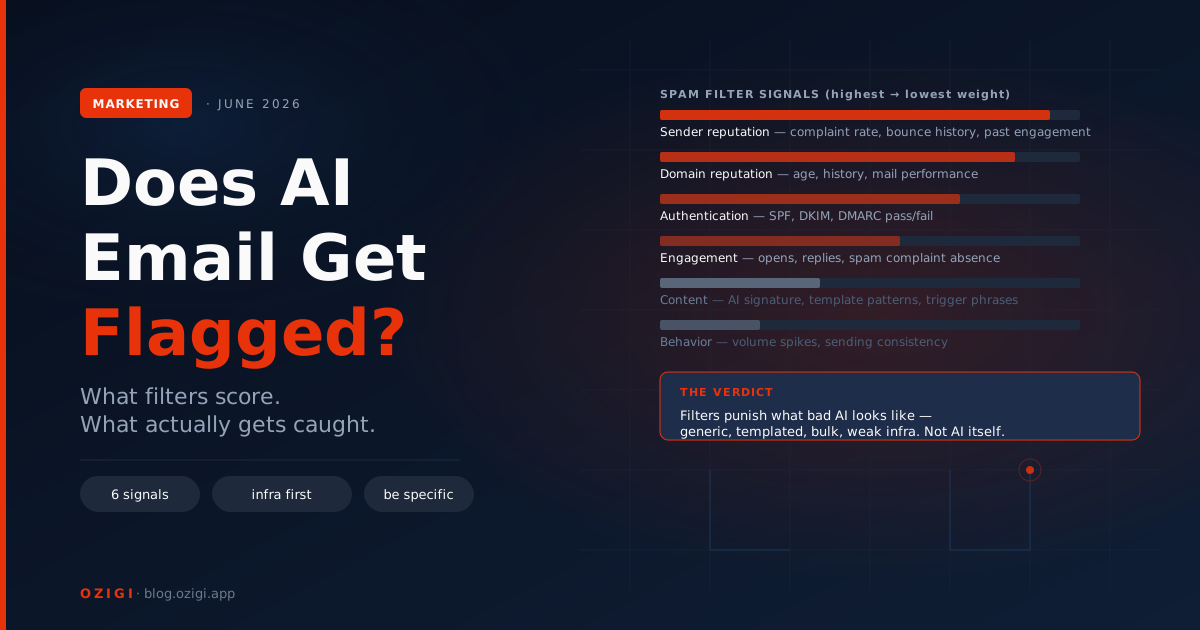
Filters score roughly six things at once, and content is only one of them. Sender reputation and behavior carry far more weight than whether a model helped write the words.
- Sender reputation: your complaint rate, bounce history, and past engagement
- Domain reputation: how old the domain is and how its mail has performed
- Authentication: whether SPF, DKIM, and DMARC pass
- Engagement: opens, replies, and the absence of spam complaints
- Content patterns: templated text, high-perplexity AI signatures, risky links, trigger phrases
- Behavior: sending volume, sudden spikes, and consistency over time
Content sits fifth on that list for a reason. A team obsessing over whether their copy "sounds like AI" while sending from an unauthenticated domain with a 5% bounce rate is fixing the wrong layer. Get the infrastructure right first, covered in how to warm up a sending domain, then worry about the words.
Why Does Generic AI Email Get Flagged When Human Email Does Not?
Because generic AI email concentrates every bad signal at once. It tends to be templated, so it trips content detection. It is usually sent in bulk, so it trips behavior detection. And it often runs on throwaway domains, so it trips reputation detection. Three strikes from one workflow.
A thoughtful email, AI-assisted or not, avoids all three. It references something real, so it does not match the template fingerprint. It goes out in measured volume from a warmed, authenticated domain. And it earns replies, which feed positive engagement signals back to the filter. The reason "human-sounding" email wins is not that a human typed it. It is that human-sounding email breaks the patterns filters are trained to catch.
How Do You Use AI Without Getting Flagged?
You use AI the way you would use a fast writer who needs direction: ground every message in real detail, vary the copy, strip the machine tells, and send from clean infrastructure. Done that way, AI speeds you up without costing deliverability.
The practical rules:
- Ground each email in a specific, true detail about the recipient, so no two are identical
- Cut the filler vocabulary and template openers that raise the machine-text signal, the approach behind Ozigi's Banned Lexicon
- Keep volume modest per inbox and ramp gradually, per the sending limits guide
- Authenticate every domain with SPF, DKIM, and DMARC, and verify your list before sending
This is exactly how the Ozigi GTM engine composes outreach: each message is built from the lead's real profile, stripped of banned filler, and paced under safe send limits. The output reads as written by a person because it is specific and clean, not because a human typed every word. That is the version of AI email that lands.
Frequently Asked Questions
Does AI-written cold email get flagged more often? Generic, templated AI email does, because filters in 2026 detect machine-text patterns and mass-personalized templates. But a specific, human-sounding email with clean authentication and steady sending lands fine whether a person or a model wrote it. Filters punish what bad AI email looks like, not AI itself.
Can spam filters detect AI-generated content? Yes. Major providers now use language models that recognize the statistical fingerprint of machine-written text and flag templated personalization that follows a formula. Detection has improved enough that emails which reached the inbox a year ago can be filtered today with identical content. But detection is only one of several scoring signals.
Is it safe to use AI for cold email? Yes, when used well. Ground each message in a real, specific detail so no two are identical, cut filler and template openers, keep volume modest, and authenticate your domain. Used that way, AI speeds up writing without hurting deliverability. The danger is generic mass output, not AI assistance.
What matters more, my copy or my sending setup? Your sending setup, in most cases. Filters weight sender and domain reputation, authentication, and behavior above content. A team polishing copy while sending from an unauthenticated domain with high bounces is fixing the wrong layer. Get infrastructure right first, then make the copy specific and human.
Why do my AI cold emails go to spam? Usually a combination: the copy is templated and near-identical across the list, the volume spiked suddenly, and the domain is new or unauthenticated. Each of those is a separate spam signal, and generic AI workflows tend to trip all three at once. Fix the infrastructure and make each email specific.
Sources and Further Reading
External references used in this article:
- How AI-generated email detection works in 2026 (Mailbird)
- How email spam filters work in 2026 (TrulyInbox)
- Cold email content mistakes that trigger spam filters (Mailforge)
- Google email sender guidelines (official)
Related Ozigi reading:
- How to write a cold email that does not sound like AI
- How many cold emails can you send per day without landing in spam
- How to warm up a sending domain in 2026
Ozigi writes outreach grounded in each lead's real profile, strips the filler that marks machine text, and paces sending to protect deliverability. The AI email that lands, by default. Free to start.
About the author
Samuel Thomas is a Technical Writer, DevRel, and Technology Advocate passionate about simplifying complex technologies for developers and businesses. He specializes in developer education and developer marketing.